
Flame-Retardant 3D Printing: How to Choose the Right Material
September 30, 2026
Enclosures for electronics, ducting in vehicles, brackets near batteries or motors. Plenty of parts need to behave predictably if they’re exposed to flame, and many of them are ideal candidates for 3D printing.
The challenge is that “flame retardant” covers a wide range of materials, ratings and test conditions. A material that suits a drone battery housing may not be the right choice for an aircraft cabin part. This guide explains what the ratings mean, which flame-retardant 3D printing materials are available, and what to check before you order.
What UL 94 Ratings Mean
UL 94 is the most widely referenced flammability standard for plastics. It measures how a material behaves when a small flame is applied to a test sample, including how long it keeps burning and whether it drips burning material.
| Rating | What it means |
|---|---|
| HB | Burns slowly when tested horizontally. The lowest classification. |
| V-2 | Self-extinguishes within 30 seconds. Flaming drips are allowed. |
| V-1 | Self-extinguishes within 30 seconds. No flaming drips. |
| V-0 | Self-extinguishes within 10 seconds. No flaming drips. |
V-0 is the rating most often specified for electrical and electronic parts. Some industries also have their own requirements. Aircraft interiors commonly reference FAR 25.853, which covers flammability, smoke and toxicity, while many rail projects reference the European standard EN 45545-2.
The Rating Is Tied to a Thickness
This is the detail most often missed. A UL 94 rating is only valid at the thickness it was tested at, or thicker.
For example, a material might be rated V-0 at 3 mm but only HB at 1.5 mm. If your part has 2 mm walls, the V-0 rating doesn’t apply to those walls. Thinner sections have less mass to resist burning, so they generally perform worse in testing.
Before choosing a material, check the thinnest section of your part against the thickness listed on the datasheet.
Material Ratings vs Part Compliance
A V-0 rated material doesn’t automatically make a V-0 rated part. The rating describes how test samples of the material performed under controlled conditions. Your finished part will have its own geometry, wall thicknesses and finishes.
For printed plastics, look for a UL Blue Card. This shows the material has been tested and certified by UL as produced through additive manufacturing, rather than as moulded samples. It’s stronger evidence that the printed material performs as stated.
If your product needs formal certification, the final sign-off usually sits with your own testing or certifying body. Choosing a certified material is the right starting point, and it gives your testing the best chance of passing first time.
Flame-Retardant Materials We Print
We print flame-retardant parts across several technologies at our Melbourne facility, so we can match the material to the part rather than working around one process.
PA 2210 FR (SLS)
A halogen-free, flame-retardant nylon based on PA12. It holds a UL Blue Card with a V-0 rating at 3 mm and an HB rating at 0.75 mm. It has also passed FAR 25.853 flammability, smoke density and toxicity testing at 1.7 mm and 2.0 mm, and meets several EN 45545-2 requirement sets for railway applications.
PA 2210 FR is a strong choice for electrical housings, ventilation ducts and interior parts where you need good mechanical properties and no support marks. It’s also well suited to drone and defence components, which you can read more about in our guide to 3D printing for drones.

Onyx FR (FDM)
A flame-retardant nylon filled with short carbon fibre, printed on our Markforged FX20. It holds a UL Blue Card and is rated V-0 at 3 mm and above.
Onyx FR produces stiff, dimensionally stable parts with a matte black finish. It suits brackets, mounts, fixtures and housings where strength matters as much as fire performance. If your part needs even higher stiffness, talk to our team about continuous carbon fibre reinforcement.
Flame Retardant Resin (MSLA)
A halogen-free resin with a UL Blue Card, rated V-0 at 3 mm, V-1 at 2.5 mm and HB at 1.5 mm. It has passed FAR 25.853 vertical burn testing at 2.5 mm, along with smoke and toxic gas testing.
This resin gives a smooth surface and fine detail, so it suits connector housings, enclosures and covers where appearance and accuracy matter. Parts are stiff and hold up well under sustained load.

Design Considerations for Flame-Retardant Parts
- Match wall thickness to the rating. Keep critical walls at or above the tested thickness. Watch for thin features like clips, ribs and bosses.
- Keep walls consistent. Sudden changes in thickness create thin spots that may not meet the rating.
- Allow for solid infill on FDM parts. Flammability testing for FDM materials is typically carried out on solid samples. Let us know your fire requirements so we can set up your part to suit.
- Check finishes and coatings. Paints, coatings and some post-processing can affect fire performance.
- Consider the full assembly. Adhesives, fasteners and inserts used alongside the printed part may also need to meet your fire requirements.
High-Temperature Alternatives
Not every part near heat needs a formal fire rating. If your part needs to hold its shape and strength at high temperatures, these options may suit it better.
ULTEM 9085 (FDM)
A high-performance polyetherimide with a long track record in aircraft interiors. Some manufacturers’ versions of ULTEM 9085 are rated V-0, but the Markforged filament we print hasn’t been certified to that rating. It’s still described by Markforged as having excellent flame, smoke and toxicity (FST) characteristics, alongside strong heat resistance and high strength for a printed thermoplastic. It suits ducting, brackets and housings that need to perform at high temperatures but don’t require a formal fire rating.
High Temp Resin (MSLA)
With a heat deflection temperature of 238°C at 0.45 MPa, High Temp Resin is one of the most heat-resistant materials available in 3D printing. It produces precise parts with fine detail and a smooth surface finish. It suits heat-resistant mounts, housings and fixtures, along with hot surface guards and parts near heating elements or lighting. Read more in our guide to high temperature resin.
CNC Machining (CNC)
A strong option when you need a solid, fully dense part in a high-temperature plastic or metal. Machined parts offer consistent properties in every direction and tight tolerances, and they’re often the right choice when a design already specifies a particular grade of material. See our CNC machining services for more.
Metal 3D Printing (SLM)
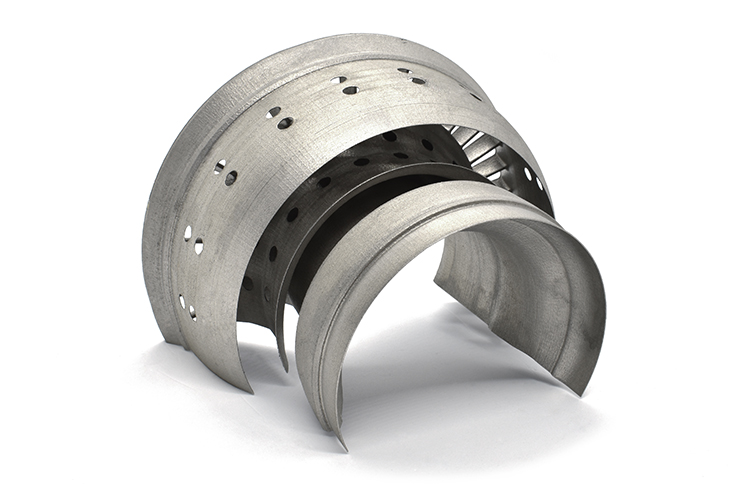
For the highest temperatures, metal removes the limits of plastic altogether. SLM combines the heat resistance of metal with the design freedom of 3D printing, so you can produce complex geometry, thin walls and internal features that would be difficult to machine or cast. Find out more on our metal 3D printing page.
Questions to Ask Before You Order
Having answers to these questions makes it easier to choose the right material from the start:
- What rating does the part need to meet, and under which standard?
- What is the thinnest wall or feature on the part?
- Do you need a material datasheet or UL Blue Card details for your records?
- What temperatures will the part see in service?
- Will the part be painted, coated or assembled with other components?
- Is this a prototype for testing, or a production part?
Printed in Melbourne
All of our 3D printing is completed at our facility in Nunawading, Melbourne, so your files stay in Australia. That matters for defence, government and commercial projects where IP security is a requirement.
To discuss a flame-retardant project, contact our team or visit our online quoting and ordering system.
Frequently Asked Questions
- What does UL 94 V-0 mean?
It means test samples of the material self-extinguished within 10 seconds after a flame was removed, with no flaming drips. The rating only applies at or above the thickness tested. - Is standard 3D printed nylon flame retardant?
Standard nylons such as PA12 aren’t formulated to be flame retardant. If your part needs a fire rating, choose a specific flame-retardant grade such as PA 2210 FR. - What is a UL Blue Card?
A Blue Card shows that UL has tested and certified a plastic as produced through additive manufacturing. A Yellow Card covers materials tested as conventionally moulded samples. - Will a V-0 rated material make my part compliant?
Not automatically. The rating applies to material test samples at a specific thickness. Your part’s design, finishes and final testing all determine whether it meets your requirements. If your part needs formal certification, you’ll need to arrange testing of the finished part through your own testing or certifying body. - Can flame-retardant parts be painted or finished?
Yes, but some coatings and finishes can change how a part performs in a fire. If your part needs to meet a specific rating, factor any finishes into your testing. - Can you supply datasheets for flame-retardant materials?
Yes. We can supply material datasheets and details of any UL listing for the material used in your parts.
Speak with us today.

Author
Craig Alexander
Craig leads the marketing and brand strategy at Formero, where he communicates complex manufacturing capabilities in a clear and practical way. He works across Formero’s advanced manufacturing services to create content that informs, educates, and supports engineers, designers, and procurement teams in making confident production decisions.


